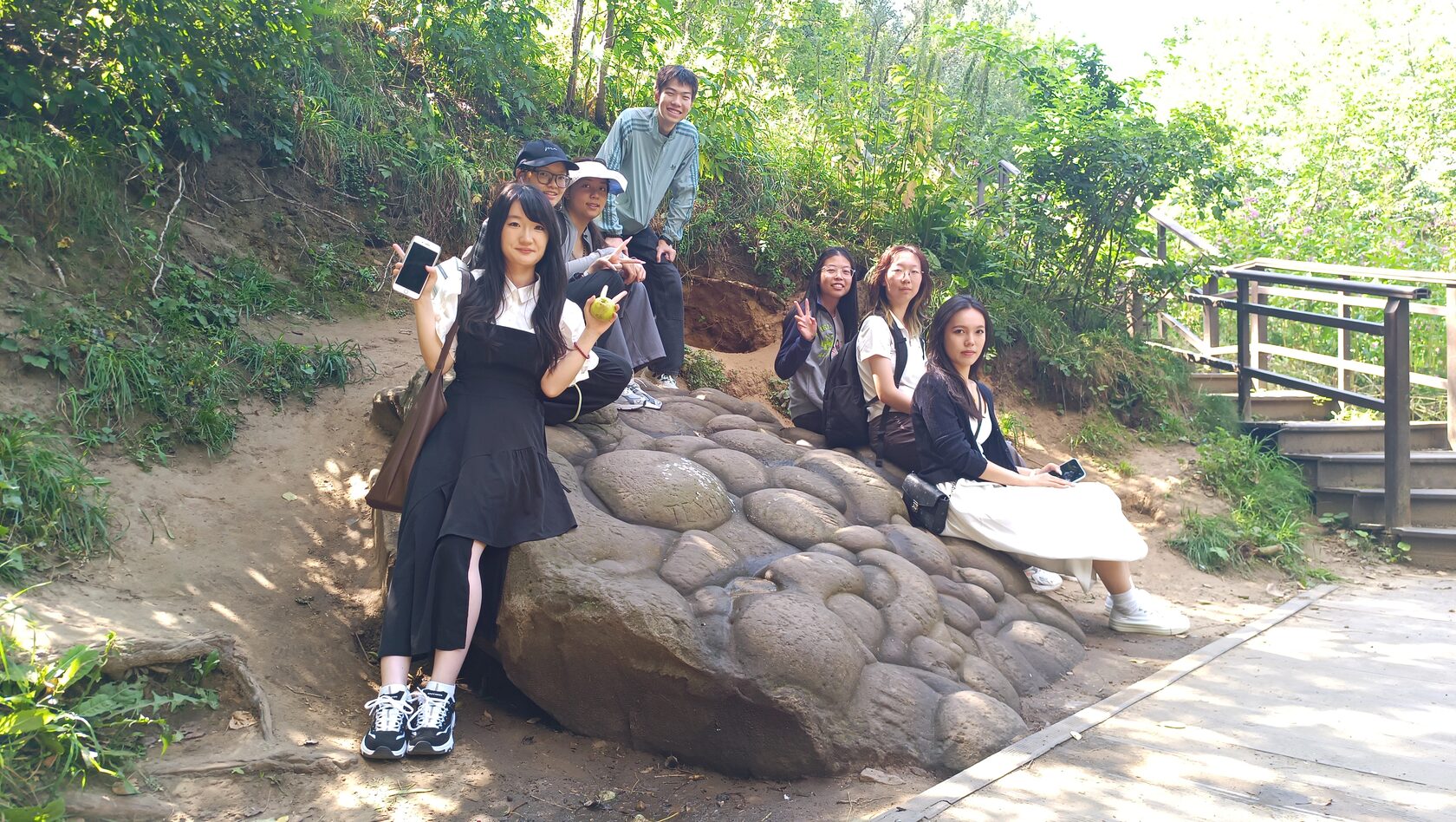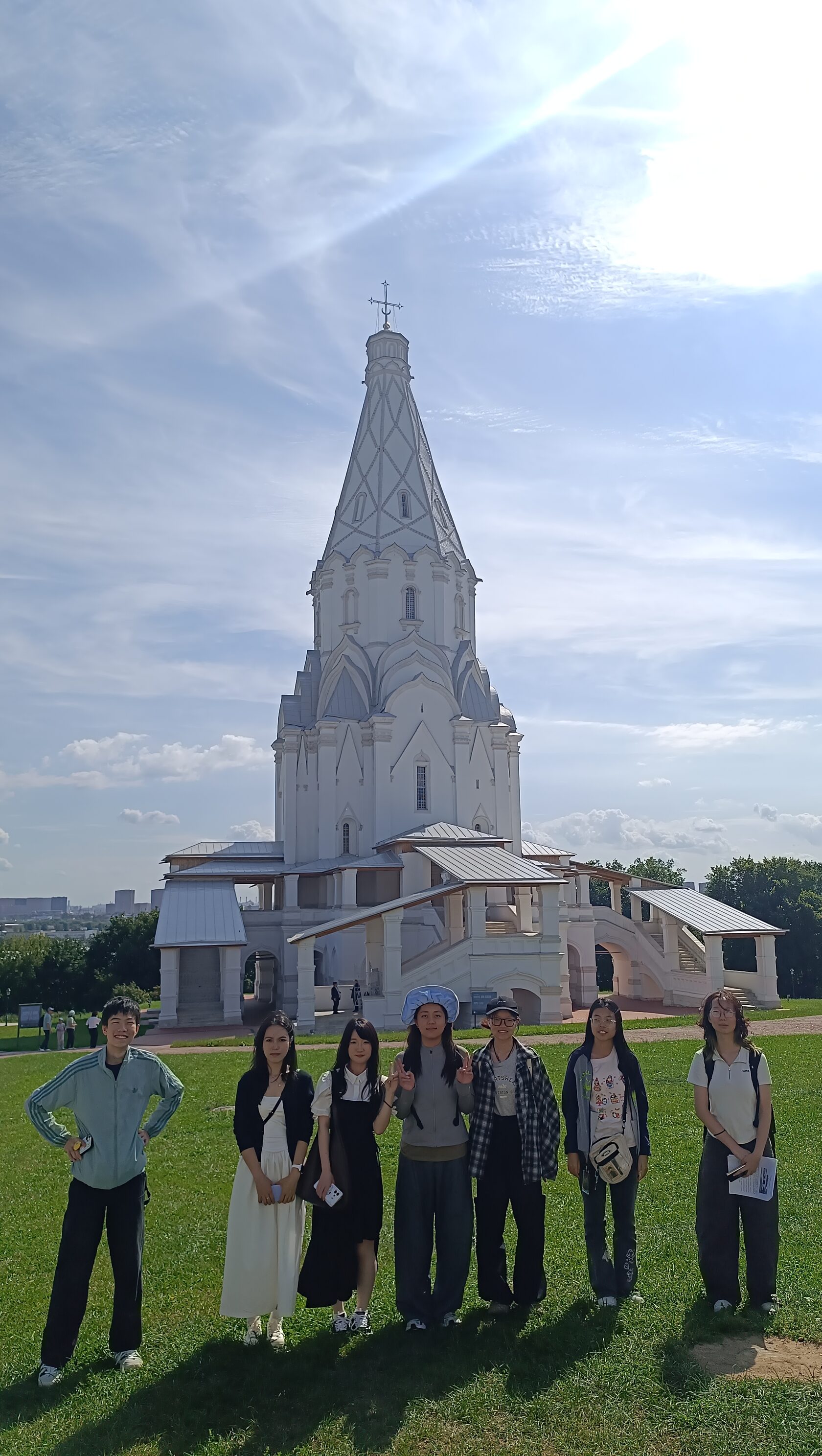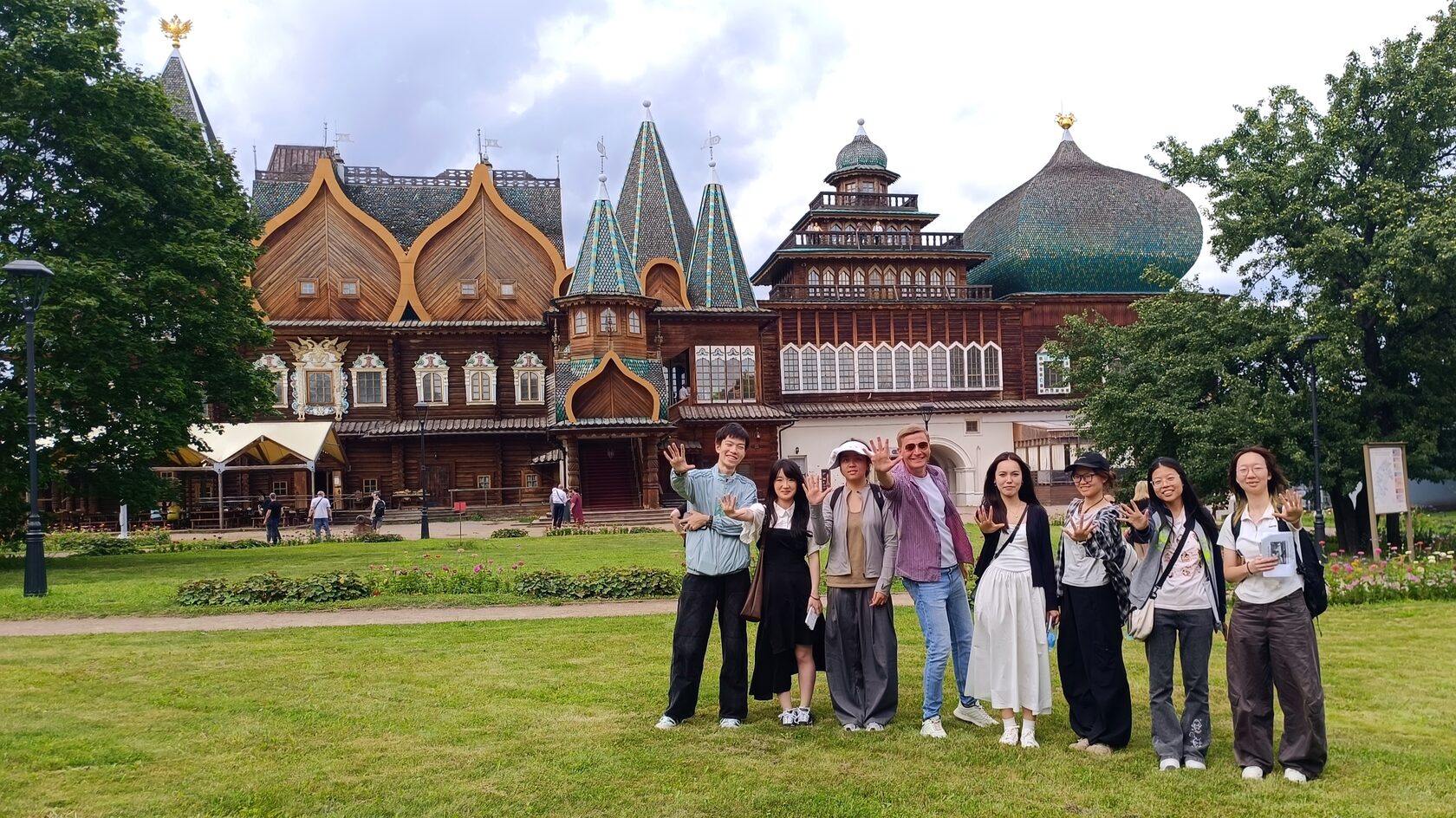
Studying the Russian language in the classroom is only part of the extensive work carried out by the faculty of the Institute of International Education with summer school students from China. Field trips that immerse students directly in the country’s history and culture play an equally important role. Today, August 25, 2026, the Tsaritsyno Museum-Reserve served as the venue for one such lesson.
The class was led by Pavel Evgenievich Krasnovid, an instructor at the Institute and a prize-winner of the All-Russian “Teacher of the Year — 2019” competition, as well as an Honored Education Worker of the Moscow Region. He is convinced that understanding architectural language helps students grasp the logic of Russian history more deeply and absorb new vocabulary more easily.
The class was led by Pavel Evgenievich Krasnovid, an instructor at the Institute and a prize-winner of the All-Russian “Teacher of the Year — 2019” competition, as well as an Honored Education Worker of the Moscow Region. He is convinced that understanding architectural language helps students grasp the logic of Russian history more deeply and absorb new vocabulary more easily.
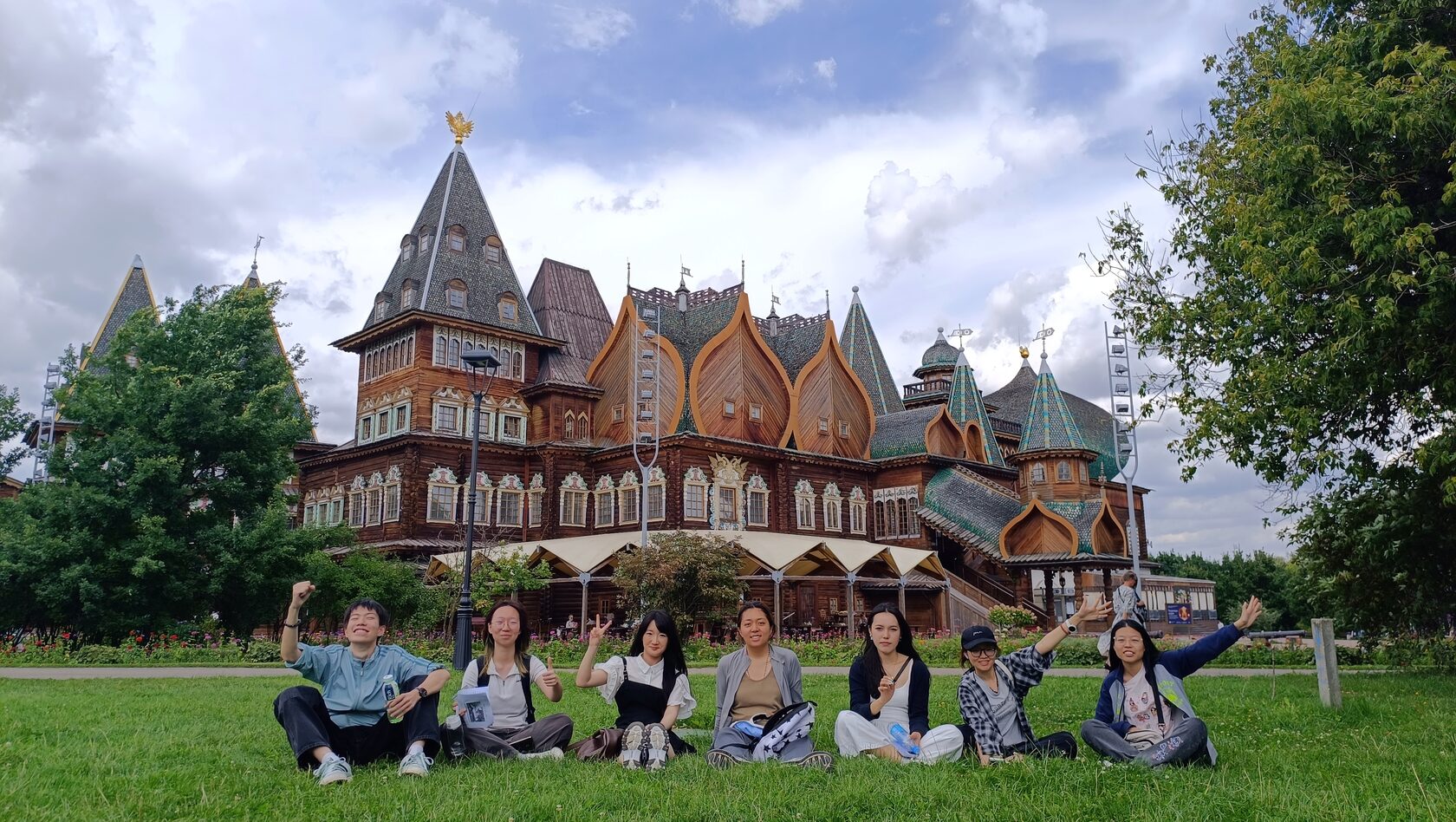
“Tsaritsyno is a place where two styles literally argue with each other on the same grounds. When a student sees with their own eyes how Gothic differs from Classicism, words like ‘architecture,’ ‘ensemble,’ and ‘façade’ stop being abstract terms — they take on shape and color,” noted P. Krasnovid.
The tour began at the park’s main entrance, offering a view of the Grand Palace — a majestic building whose appearance combines two entirely different architectural concepts. Students learned that the ensemble was originally conceived in the Gothic style by architect Vasily Bazhenov, but was later reworked by Matvei Kazakov in the spirit of Classicism — with strict symmetry, porticoes, and restrained decor.
The group then walked past red-brick structures adorned with lacy white-stone patterns — Khlebny Dom (the Bread House) and the Figured Bridge, both striking examples of Russian pseudo-Gothic style, where turrets, pointed-arch windows, and decorative battlements create an almost fairy-tale image.
The group then walked past red-brick structures adorned with lacy white-stone patterns — Khlebny Dom (the Bread House) and the Figured Bridge, both striking examples of Russian pseudo-Gothic style, where turrets, pointed-arch windows, and decorative battlements create an almost fairy-tale image.
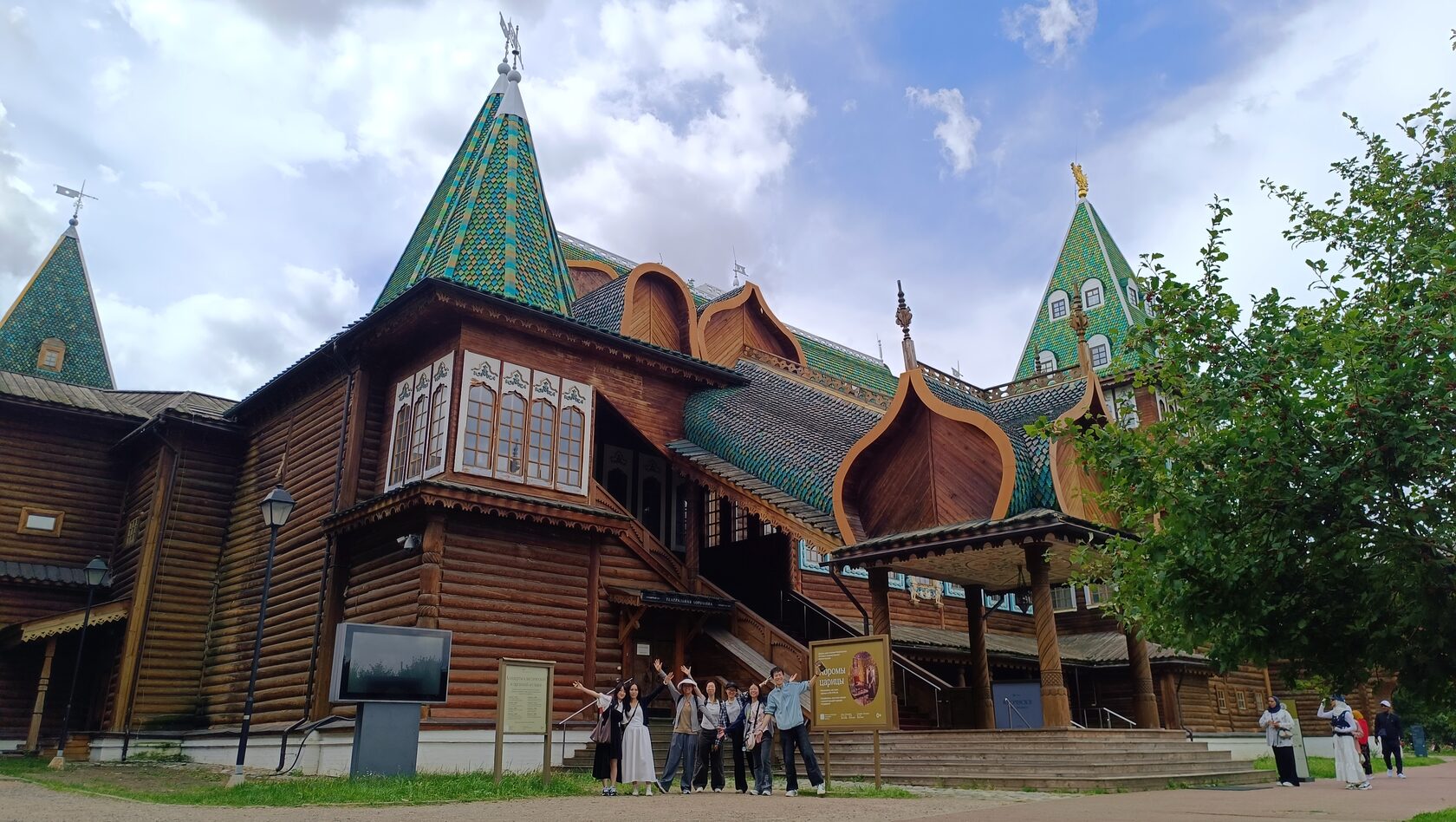
The final part of the route led the students through a picturesque landscape park with a cascade of ponds, offering a panoramic view of the entire ensemble — here, the instructor drew the students’ attention to how the palace’s classicist rigor harmoniously blends with the park’s romantic landscape layout.
The lesson-excursion at Tsaritsyno became more than just a Russian language class for the students — it was a genuine lesson in architectural history, where theory met living experience.
The Institute of International Education’s summer school continues its work in Moscow, revealing to students from China not only grammar and vocabulary, but the true soul of Russian culture.